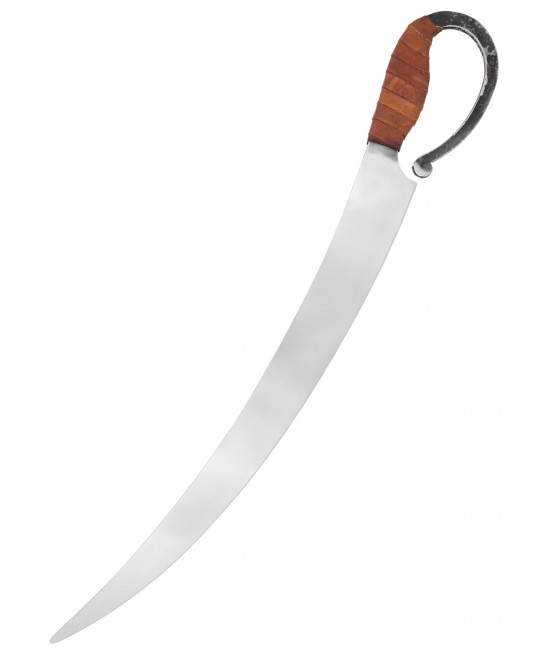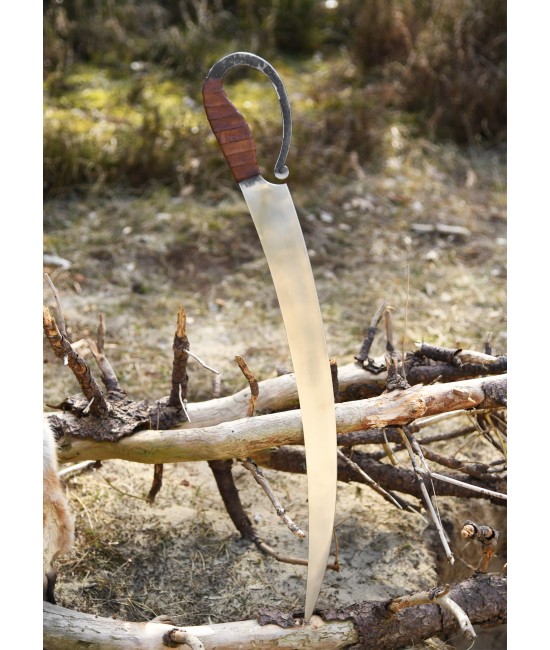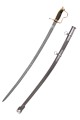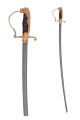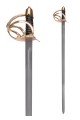

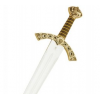
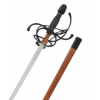
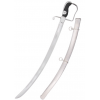
Dussack, late medieval saber
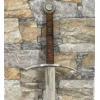
Dussack, Short Late Medieval and Renaissance Saber, without scabbard
Reenactment Sword, SK-B
Details:
- Reenactment Quality Class: SK-B
- Material: C60 (carbon steel, not stainless), hardened and heat-treated, leather-wrapped grip
- Blade Rockwell Hardness: approx. 48-50 HRC
- Overall Length: approx. 73 cm
- Blade Length: approx. 57 cm
- Handle Length: approx. 17 cm
- Blade Width: approx. 5.6 cm (4 cm from the tip / 1 cm at the hilt) Tip)
- Blade thickness: approx. 5 mm (4 mm before the tip / 2 mm at the tip)
- Cutting edge: approx. 2.5 mm
- Balance point: approx. 13 cm in front of the handle
- Weight: approx. 1 kg
- Supplied without scabbard
This is a ULFBERTH® product.
With this high-quality yet affordable saber from the late European Middle Ages and Renaissance, we offer the historical fencer a superb weapon – a stable, well-balanced stage combat sword with excellent value for money.
The so-called Dussack (also spelled Dussak, Dusack, Dussägge, or Tisacke) originated in the 15th century and remained in use until the 17th century. This single-edged, one-handed slashing and thrusting weapon of Bohemian origin soon spread to Germany and received its distinctive name from the Czech word tesák (literally "catch," more broadly "hunting sword").
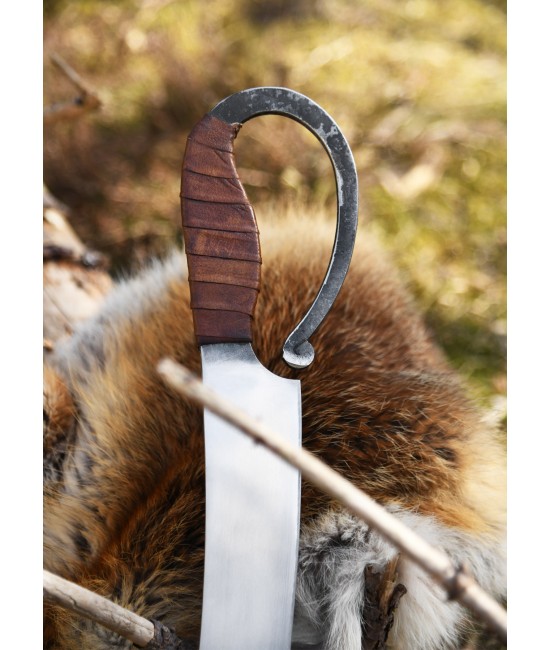
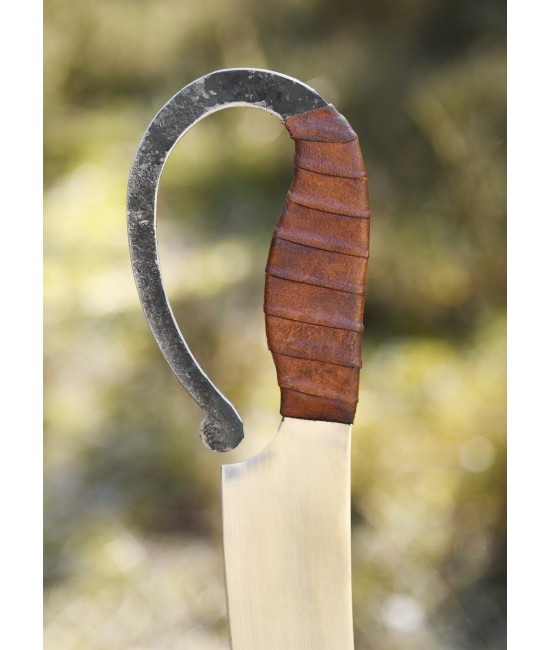
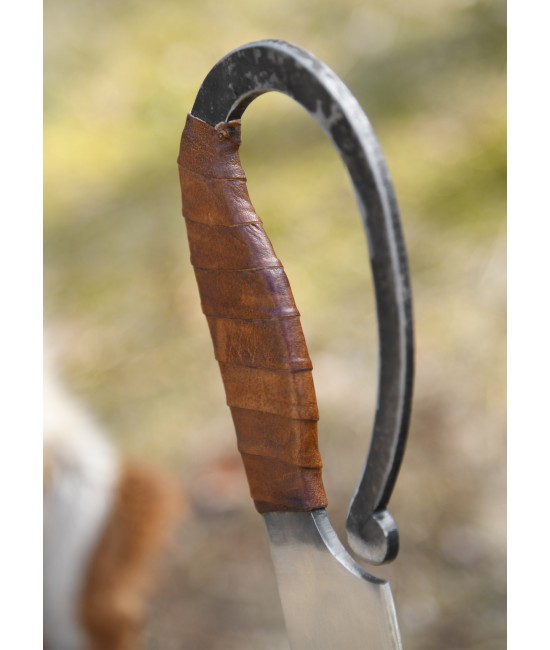
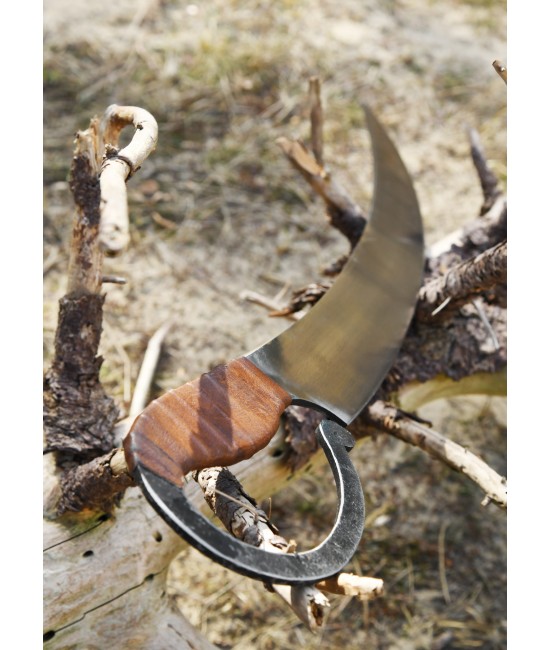
The Dussack was shaped like a short saber or cutlass. It typically consisted of a broad, slightly curved blade that tapered to a point and was shaped into an oval loop at the opposite end to form a grip with a guard. For better grip, the handle was often covered with fabric or leather. This simple, one-piece construction, easy and inexpensive to manufacture, contributed significantly to its popularity, especially among the German middle and lower classes.
The Dussack served primarily as a training weapon used in the German fencing school of the early modern period. Since training Dussacks were usually made of wood, which is naturally perishable, not a single example has survived the ravages of time. However, numerous written and iconographic sources from the Renaissance (books, manuals, prints, and even friezes) attest to its widespread use as a fencing school or training weapon during this period. To this day, only a few simple, roughly hewn iron dussacks have survived.
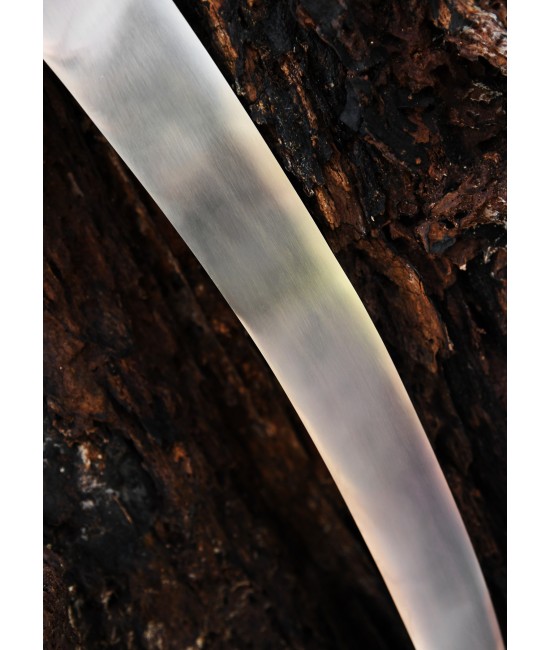
The dussack saber offered here is crafted from a single piece of carbon steel. The unsharpened blade is approximately 2.5 mm thick, and the tip is rounded. The hilt has a roughly forged surface. As with many historical examples, it is shaped as a simple bow to protect the hand and wrapped in brown leather for enhanced grip. This late medieval stage combat saber is supplied without a scabbard.
This simple yet elegant medieval sword is a great addition to any collection of HEMA martial artist, historical reenactor, or weapons enthusiast. Its dimensions, shape, and well-balanced weight distribution ensure maneuverability and safe handling.
Of course, this stage combat-ready short saber is not only perfect for reenactment, stage combat, or sparring, but also as a collector's item, decorative object, or prop to complete your costume.
This Top quality at a great price – why wait any longer? Order this first-class, affordable sword now and bring a piece of history home!
The steel used here is not stainless and may show slight signs of corrosion. We recommend regularly maintaining the blade, for example with Ballistol, a universal oil that is excellent for preserving steel products.
The specifications above may vary slightly from piece to piece.
- Stock: In Stock
- Model: 2780
- SKU: ULF-SW-18